
High-speed doors are specialized commercial and industrial doors engineered for environments that demand fast, efficient, and frequent access. Designed to open and close several times faster than standard commercial doors, these high-performance doors help manage workflow, maintain temperature control, and improve safety in high-traffic areas.
Built from durable materials and powered by advanced motor systems, high-speed doors are used in industries where maintaining productivity and environmental control is critical, such as manufacturing plants, warehouses, cleanrooms, and cold storage facilities.
In this guide, we’ll explain how high-speed doors work, explore their benefits and types, discuss common applications across industries, and outline key features, maintenance considerations, and selection tips to help you understand where and why these doors are essential in commercial environments.
How High-Speed Doors Work
High-speed doors use advanced mechanical and electronic systems designed for quick, smooth, and safe performance. Unlike standard overhead or traditional sectional doors, these models use high-torque motors and specialized gear systems that provide opening and closing speeds ranging from 20 to 60 inches per second. This rapid operation reduces waiting times at busy access points and maintains controlled environments inside the facility by reducing exposure time.
Most high-speed doors use counterbalance or springless drive systems designed to distribute tension evenly across the curtain or panel. This reduces mechanical wear and allows smoother operation under continuous use. Integrated sensors automatically detect obstructions in the door’s path, triggering an instant stop or reverse to prevent strain on the motor and mechanical components. Variable speed drives provide precise control, enabling soft starts and stops that protect the system and extend its operating life.
In addition to drive technology, modern high-speed doors rely on advanced sealing and insulation systems to maintain environmental control. Durable perimeter seals, insulated curtains, and pressure-rated panels limit air exchange between zones, helping stabilize internal temperatures and minimize exposure to outside air. These components work together to ensure smooth, quiet, and controlled operation even in high-traffic industrial environments.
Benefits of High-Speed Doors
High-speed doors improve a facility’s efficiency, performance, and safety in demanding settings. Their fast operation and durable construction make them a valuable investment for facilities that depend on smooth workflow and controlled environments. Key benefits include:
- Faster operations: These doors open and close quickly to reduce wait times and improve traffic flow throughout the facility.
- Energy efficiency: Tight seals and rapid cycling help maintain indoor temperatures and reduce energy costs.
- Improved safety: Built-in sensors, soft-edge technology, and additional safety features detect movement and prevent collisions or injuries.
- Durability: Reinforced materials and heavy-duty components allow the door to perform reliably under high-cycle use.
- Reduced maintenance: Advanced drive systems and fewer moving parts minimize the need for frequent service or replacement, leading to less downtime.
- Cleanliness and hygiene: Airtight seals keep out dust, debris, and pests, helping maintain sanitary work conditions.
- Climate control: Insulated designs preserve temperature stability in clean rooms, sensitive production areas, and even cold storage areas, maintaining extreme temperatures.
- Noise reduction: The tight-fitting panels help isolate loud areas to create a quieter, more comfortable workspace.
- Weather protection: Strong construction and reliable seals prevent wind, rain, and debris from entering the building.
- Automation compatibility: Many models integrate with access control systems and sensors for fully automated operation.
Types of High-Speed Doors
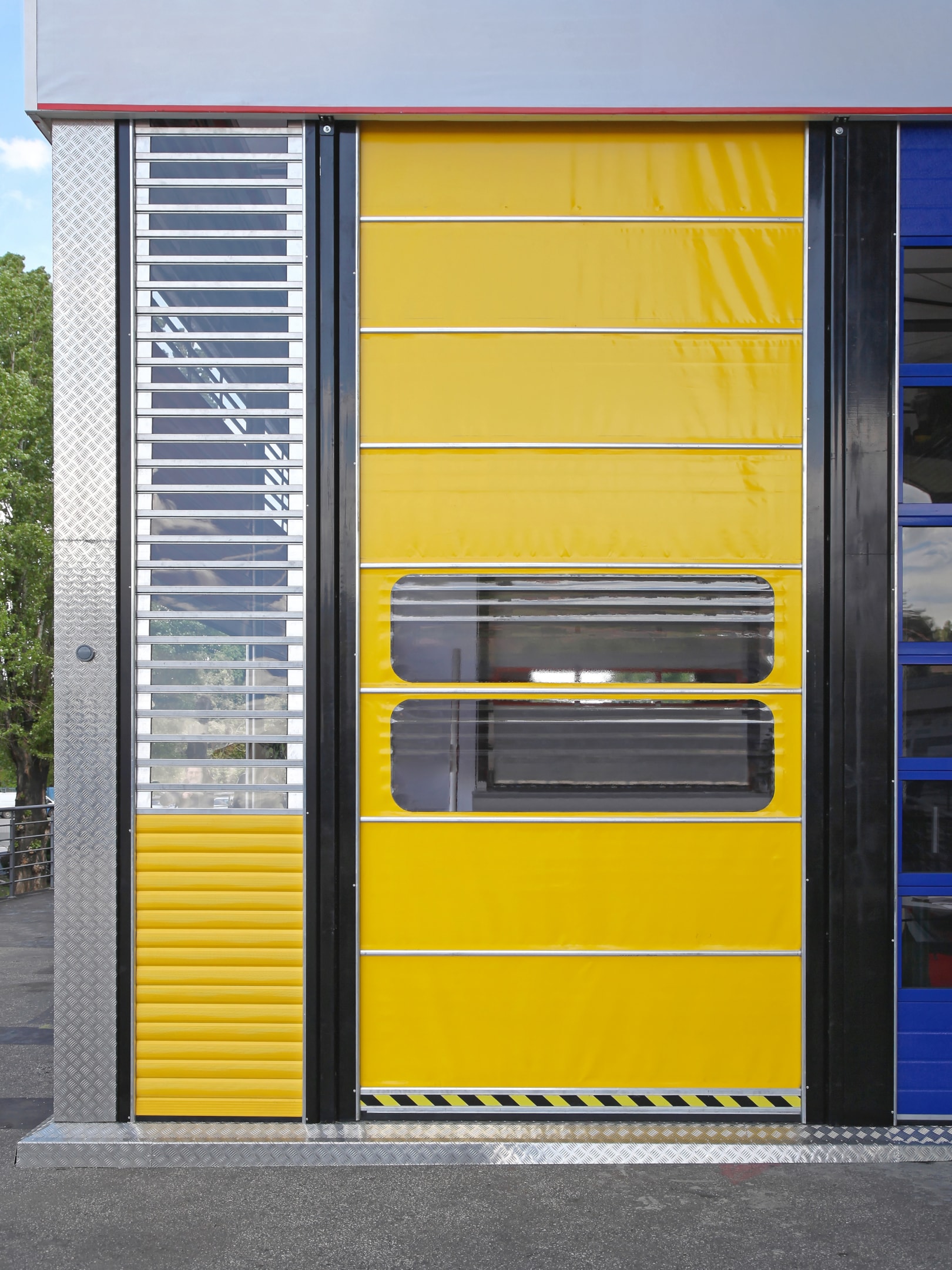
High-speed doors differ in material, insulation, and performance. The table above highlights the key specifications that help determine which type best suits your facility. Below is a closer look at how each type functions and where it performs best.
| Type | Material | Speed Range | Durability | Sound Reduction | Cost Range | Difficulty to Maintain | Expected Lifespan |
|---|---|---|---|---|---|---|---|
| Fabric roll-up | Reinforced PVC or polyester | Moderate to fast | Moderate | Low | $$ | Low | 10-15 years |
| Rubber high-speed | Heavy synthetic rubber | Moderate | Very high | Moderate | $$$ | Low | 15-20 years |
| Metal roll-up | Aluminum or galvanized steel | Moderate | High | Moderate | $$$ | Moderate | 15-25 years |
| Freezer and cold-storage | Insulated composite panels or layered fabric | Fast | High | Moderate | $$$ | Moderate | 10-15 years |
| Clean room | Smooth, non-porous PVC or aluminum | Fast | Moderate | High | $$$ | Low | 10-15 years |
| Spiral / rigid panel | Aluminum or steel interlocking slats | Fast | Very high | High | $$$ | Low | 20+ years |
| PVC curtain | Flexible transparent PVC strips | Fast | Moderate | Low | $ | Low | 5-10 years |
| Hybrid high-speed | Combination of fabric and insulated panels | Fast | High | Moderate | $$$ | Moderate | 15-20 years |
Fabric Roll-Up Doors
Fabric roll-up doors are lightweight, flexible, and built for speed. Made from reinforced PVC or polyester, these high-speed roll-up doors are best suited for interior applications where space and efficiency are priorities. These fast-opening doors improve workflow by allowing quick access between departments while helping contain dust and debris. Their low maintenance needs and moderate cost make them an ideal solution for warehouses and production areas.
Rubber High-Speed Doors
Rubber high-speed doors are engineered for heavy use in tough environments. The thick synthetic rubber construction means these doors are highly durable and can endure frequent impacts from equipment and resist corrosion from moisture or chemicals. They perform exceptionally well at loading docks, manufacturing plants, and outdoor facilities exposed to weather or debris. Their strong materials, long lifespan, and low maintenance demands make them a durable option with exceptional performance.
Metal Roll-Up Doors
Metal roll-up doors combine strength and security for exterior openings. Typically made of aluminum or galvanized steel, these high-speed overhead doors provide excellent resistance against weather, wind, and unauthorized entry. These heavy-duty doors are the perfect solution for parking garages, logistics hubs, and industrial exteriors with high volumes of traffic, requiring durability and controlled access. Their solid construction also contributes to moderate sound reduction and long-term reliability compared to traditional doors.
Freezer and Cold-Storage Doors
Freezer and cold-storage doors use high-quality materials to preserve stable temperatures in refrigerated or climate-sensitive areas. Their insulated panels and tight perimeter seals minimize air exchange and energy loss, making them essential for food processing and cold storage facilities. They operate at high speeds to reduce temperature fluctuations and condensation, supporting both energy efficiency and product quality.
Clean Room and Pharmaceutical Doors
Clean room and pharmaceutical doors maintain hygiene and environmental control in sterile spaces. Constructed from smooth, non-porous materials for easy cleaning, they prevent contamination by regulating airflow and particle exchange. These fast-acting doors are quiet and support efficiency in laboratories, hospitals, and production facilities that follow strict cleanliness standards.
Spiral or Rigid Panel Doors
Spiral or rigid panel doors are among the most advanced options for exterior and high-security applications. Made from interlocking aluminum or steel slats, they combine high-speed operation with superior insulation, weather resistance, and compact design. These doors perform well in high-traffic environments exposed to the elements, offering long service life, minimal maintenance, and strong acoustic control.
PVC Curtain Doors
PVC curtain doors offer a simple, cost-effective solution for separating interior spaces while maintaining visibility. The transparent panels of these high-performance models allow light transmission and clear sightlines, improving safety in busy facilities. They operate quickly and quietly, making them well-suited for interior workspaces that require airflow without sacrificing separation.
Hybrid High-Speed Doors
Hybrid high-speed doors combine the durability of rubber or fabric materials with the insulation of rigid panels. This blend makes them ideal for environments that require both impact resistance and temperature control. They deliver balanced performance for mixed- and frequent-use facilities such as distribution centers, automotive plants, or cold storage areas that experience varied operational demands.
Applications and Industries That Use High-Speed Doors
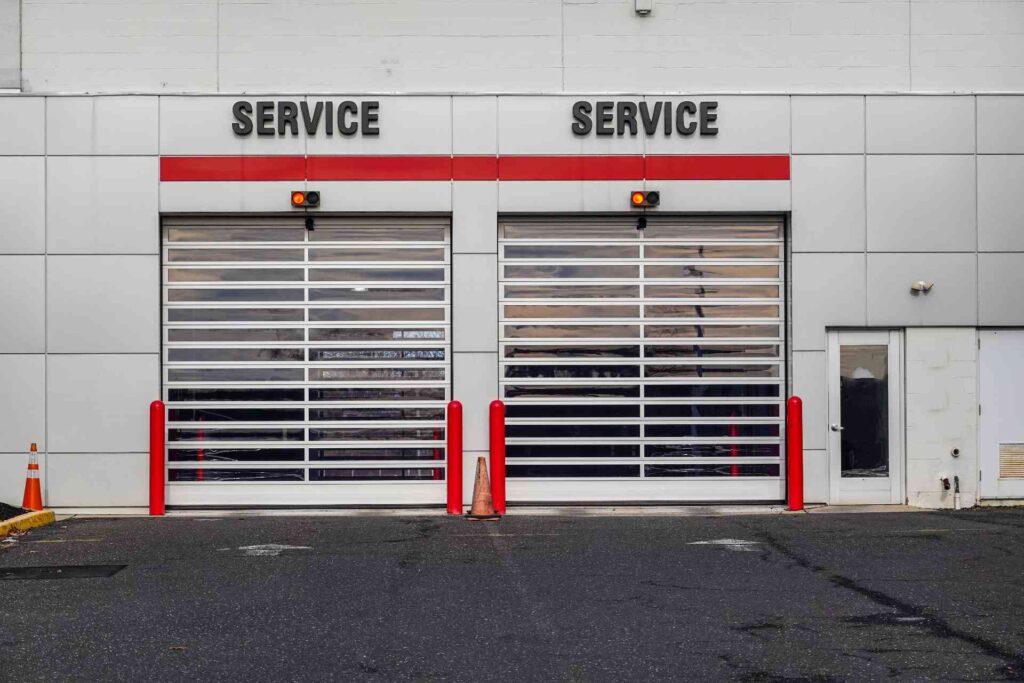
High-speed doors are essential in industries where performance, safety, and environmental control are priorities. The table below outlines how these doors function across various sectors, highlighting their purpose, advantages, and ideal configurations for meeting specific business needs.
| Industry / Environment | Primary Function | Key Benefits | Recommended Door Types |
|---|---|---|---|
| Warehousing and logistics | Manage access between storage areas, docks, and distribution zones | Faster cycle times, energy savings, dust and pest prevention | High-performance rolling doors, spiral / rigid panel |
| Manufacturing and production | Separate production zones and improve workflow | Noise control, cleaner environments, and efficient movement | Fabric roll-up, rubber high-speed, hybrid high-speed |
| Food processing and cold storage | Maintain temperature control and hygiene compliance | Energy efficiency, contamination prevention, and consistent refrigeration | Freezer / cold-storage, hybrid high-speed |
| Automotive and transportation | Provide fast and safe vehicle access | Durability, impact resistance, and smooth traffic flow | Rubber high-speed, metal roll-up, spiral/rigid panel |
| Healthcare and pharmaceuticals | Maintain sterile environments and pressure control | Contamination prevention, quiet operation, regulatory compliance | Clean room/pharmaceutical, fabric roll-up |
| Retail and commercial facilities | Manage deliveries and secure internal access | Energy savings, easy operation, and aesthetic flexibility | Metal roll-up, fabric roll-up, PVC curtain |
| Agriculture and livestock operations | Protect interior areas from weather and contaminants | Temperature stability, air quality, and pest protection | Rubber high-speed, PVC curtain |
| Hospitality and institutional buildings | Improve access efficiency in kitchens and service areas | Quick operation, sanitation, and quiet performance | Fabric roll-up, clean room/pharmaceutical |
| Aerospace and defense | Secure large openings while maintaining climate control | Precision operation, security, and environmental containment | Spiral/rigid panel, metal roll-up, hybrid high-speed |
| Public infrastructure and transit | Manage access and security in transportation hubs, public works, and municipal facilities. | Fast operation, automation compatibility, enhanced safety, and energy efficiency in high-traffic environments | Spiral/rigid panel, metal roll-up, rubber high-speed |
| Energy and utilities | Contain noise, dust, and emissions in high-demand facilities | Safety, environmental control, and long service life | Rubber high-speed, spiral/rigid panel |
Warehousing and Logistics
Warehouses and distribution centers rely on high-speed door options to maintain smooth, efficient loading operations. Their quick cycling reduces waiting time, while durable seals preserve indoor temperatures and prevent dust, debris, or pests from entering.
Manufacturing and Production
In manufacturing facilities, high-speed doors help separate departments, contain dust and noise, and improve workflow efficiency. The right door allows seamless transitions between work areas while maintaining safety and environmental control.
Food Processing and Cold Storage
Food and beverage operations depend on insulated high-speed doors to maintain hygiene and temperature stability. They reduce energy loss and help facilities comply with strict food safety regulations.
Automotive and Transportation
Auto plants, service centers, and transportation hubs benefit from durable, impact-resistant doors that handle constant movement, increasing productivity while protecting vehicles and personnel from exposure to outdoor conditions.
Healthcare and Pharmaceuticals
In hospitals, laboratories, and clean production environments, high-speed doors can make a significant difference in regulating air pressure and preventing contamination. Their quiet, precise operation supports compliance with cleanliness and safety standards.
Retail and Commercial Facilities
Retail spaces and commercial buildings use high-speed doors to balance security with accessibility. They maintain interior climate control, streamline deliveries, and enhance visual appeal in customer-facing areas.
Agriculture and Livestock Operations
Farms, dairies, and agricultural storage areas use high-speed doors to regulate airflow and temperature. They prevent contamination and create safer, cleaner environments for livestock and stored goods.
Hospitality and Institutional Buildings
Hotels, restaurants, and large institutions use these doors in kitchens, service corridors, and maintenance areas. Their quiet, reliable operation supports cleanliness and keeps service areas running smoothly.
Aerospace and Defense
High-speed doors in aerospace and defense applications provide secure, climate-controlled access to large hangars and assembly areas. They protect sensitive equipment from contamination, temperature changes, and unauthorized access while supporting precise operational standards.
Public Infrastructure and Transit
Public and municipal facilities, including airports, transit depots, fire stations, and public works buildings, rely on high-speed doors to maintain security and efficiency in high-traffic operations. These doors enable quick, reliable access for vehicles and staff while maintaining energy efficiency and safety in demanding conditions. Their automation capabilities allow seamless integration with access control and emergency systems, ensuring dependable performance where uptime and safety are critical.
Energy and Utilities
Power plants, recycling centers, and waste management sites use high-speed doors to contain noise, dust, and fumes. Their durability and sealing performance improve worker safety and support environmental compliance.
Key Features to Look For When Choosing High-Speed Doors for Your Facility
Selecting the right high-speed door starts with understanding the features that matter most for your environment. Each design element affects how efficiently your facility operates, how safely people and equipment move, and how well you maintain temperature, cleanliness, and security.
| Feature | Description |
|---|---|
| Opening speed and cycle life | A high-speed door’s performance depends on its operating speed and cycle rating. Faster operation minimizes air exchange and improves workflow, while a high cycle rating ensures the door can handle frequent daily use without mechanical failure. |
| Safety sensors and reversing mechanisms | Modern high-speed doors include motion detectors, light curtains, and soft-edge sensors that stop or reverse movement when detecting people or equipment in the door’s path. These safety systems protect workers and prevent costly damage. |
| Durable materials | Materials like reinforced fabric, rubber, aluminum, and composite panels provide varying levels of strength, impact resistance, and corrosion protection. Selecting the right material ensures the door withstands your facility’s specific conditions. |
| Environmental sealing and insulation | Effective sealing prevents temperature loss and contamination between controlled areas. Insulated models are essential for cold storage, food processing, and climate-controlled environments where energy efficiency matters. |
| Wind and weather resistance | Exterior doors must handle high wind loads, rain, and temperature swings. Reinforced curtains and rigid-panel construction keep these doors stable, secure, and fully functional in outdoor or exposed environments. |
| Smart controls and automation | Integration with building automation systems, motion sensors, or access controls allows for seamless operation and reduces manual handling. Automated doors also enhance energy management by opening only when needed. |
| Low-maintenance design | Springless systems, direct-drive motors, and accessible components minimize wear and simplify service. Choosing a door built for low maintenance reduces downtime and long-term operating costs. |
| Noise reduction | Sound-dampening panels and tight seals help contain mechanical and operational noise, improving comfort and communication in busy production or logistics areas. |
| Aesthetic customization | Color options, finish styles, and vision panels let businesses match functionality with design, creating a professional appearance while maintaining durability. |
| Compliance and certification | Look for doors that meet OSHA, ANSI/DASMA, and ISO standards. Verified compliance ensures the system performs safely and meets local code requirements. |
| Manual override or emergency operation | A manual release function allows the door to be opened during power outages or equipment malfunctions, maintaining access and safety in emergencies. |
| Corrosion resistance | In wash-down areas or outdoor facilities, corrosion-resistant materials and finishes prevent degradation caused by moisture, chemicals, or cleaning agents. |
| Variable speed control | Adjustable speed settings give operators control over door movement, allowing slower cycles for pedestrian zones and faster speeds for high-traffic equipment routes. |
| Custom size availability | Many facilities require oversized or uniquely shaped openings. Custom-built doors accommodate these specifications without sacrificing performance or safety. |
| Noise isolation rating | For environments sensitive to sound, such as labs or offices within industrial buildings, doors with tested acoustic ratings provide measurable noise containment. |
| Vision panels or windows | Transparent inserts improve safety by giving workers visibility through the door, reducing collision risks in busy traffic zones. |
| Touchless activation options | Hands-free activation through sensors, badges, or remotes enhances hygiene and efficiency, particularly in healthcare, clean room, and food production environments. |
When choosing a door, consider how these features align with your facility’s environment, workflow, and long-term goals. A professional site assessment can help determine which combination of materials, controls, and performance ratings will deliver the greatest safety, efficiency, and return on investment.
Keep Your Facility Running Smoothly with Professional High-Speed Door Service
High-speed doors play a vital role in keeping your facility safe, efficient, and productive. Whether you’re managing a warehouse, manufacturing plant, or cold storage facility, properly installed and maintained doors help control workflow, reduce energy loss, and protect people and equipment.
At Commercial Door, we specialize in the installation, repair, and maintenance of high-speed doors for businesses across Oklahoma, Texas, and Western Arkansas. Our technicians are trained to handle all aspects of door performance, from precise alignment and calibration to troubleshooting and safety testing, so your operation never slows down.
If your facility needs new high-speed doors or professional maintenance to keep existing ones performing at their best, we’re here to help. Contact Commercial Door today to schedule an estimate or service visit and ensure your doors continue operating safely, efficiently, and reliably year-round.


