
Fire door compliance is a legal obligation backed by state law and enforced by fire marshals across Western Arkansas. Fire doors protect building occupants, slow the spread of fire and smoke, and keep exit routes functional during an emergency.
This guide walks Western Arkansas business owners through the regulations that apply to their property, what compliance looks like in practice, and how to avoid the violations that most commonly trigger failed inspections.
What Governs Fire Door Regulations in Western Arkansas?
Fire door regulations in Western Arkansas are built on a consistent framework of nationally recognized standards and a statewide fire code, enforced locally by the fire marshal’s office in each jurisdiction.
There are governing bodies and requirements that apply uniformly throughout the region. The 2021 Arkansas Fire Prevention Code, administered by the Arkansas Department of Public Safety, is the foundational state document. The 2021 International Fire Code, with Arkansas-specific amendments, applies to every city and county in Western Arkansas. Three national standards are incorporated by reference:
- National Fire Protection Association (NFPA) 80 governs how fire doors must be installed, tested, and maintained, covering clearance tolerances, hardware specifications, and annual inspection requirements.
- NFPA 101 focuses on protecting occupants by regulating egress routes, fire barriers, and the door assemblies within them.
- The International Building Code (IBC) determines where fire-rated construction, including fire door assemblies, is required based on a building’s occupancy classification, construction type, and design.
Fire Door Assembly Requirements Under Arkansas Code
Under the 2021 Arkansas Fire Prevention Code and NFPA 80, every fire door assembly in your building must meet specific performance and installation requirements that are consistent across all Western Arkansas jurisdictions:
- Fire rating: Fire doors carry ratings from 20 minutes to three hours, meaning the assembly can contain fire and smoke for at least that duration.
- Labeling: Every component of a compliant assembly, including the door slab, frame, and often the hardware, must carry a permanently affixed, legible label from an accredited testing laboratory. A missing, painted-over, or illegible label renders the door non-compliant.
- Self-closing mechanism: Fire doors must be equipped with an approved closer that returns the door to the fully closed and latched position without manual assistance.
- Positive latching: The door must latch fully into the strike when it closes. A door that swings shut but does not positively engage the latch does not meet code.
- Clearance gaps: NFPA 80 specifies maximum allowable gaps at the head, jamb, and bottom of the door. Exceeding these tolerances allows fire and smoke to pass through.
- No unauthorized modifications: Drilling additional holes, installing non-rated hardware, or altering the door in any way not tested as part of the original assembly can void the fire rating.
Navigating Multiple Jurisdictions Across Western Arkansas
Western Arkansas spans multiple jurisdictions, each with its own fire marshal enforcing the same underlying state code but with distinct inspection processes, permit timelines, and enforcement priorities. Here is what to expect from each major authority having jurisdiction (AHJ) in the region.
Fort Smith Fire Prevention Division
The Fort Smith Fire Prevention Division handles fire inspections and plan reviews for commercial properties throughout Fort Smith and the River Valley. Fort Smith’s significant industrial and manufacturing base means the Fire Prevention Division regularly focuses on fire door compliance in warehouse, production facility, and heavy commercial settings, with particular attention to exit corridors and transitions between office and production spaces.
Fayetteville Fire Marshal’s Office
The Fayetteville Fire Marshal’s Office enforces fire safety citywide through plan reviews, inspections, and compliance follow-ups. Fayetteville’s sustained growth in mixed-use development, healthcare, and higher education keeps the office consistently active on new construction and change-of-occupancy reviews. Businesses planning renovations or tenant improvements should engage the Fire Marshal’s Office before construction begins.
Rogers Fire Department, Community Risk Reduction Division
The Community Risk Reduction Division of the Rogers Fire Department handles commercial plan reviews and life safety inspections throughout Rogers. The city’s rapid retail and hospitality growth, particularly around the Pinnacle Hills corridor, has made fire door compliance in new commercial construction a consistent enforcement focus. Rogers publishes its current adopted codes on the city website.
Springdale Fire Department
The Springdale Fire Department enforces fire safety across one of the region’s most commercially diverse cities, including food processing facilities, distribution centers, retail properties, and medical offices. Businesses in food processing and warehouse operations should pay particular attention to fire door assemblies in high-piled storage areas and at production-to-office transitions.
Other Municipalities and Multi-Location Businesses
For businesses in Bentonville, Van Buren, Alma, Siloam Springs, or other municipalities, the Arkansas State Fire Marshal’s Office provides statewide oversight and can direct you to the appropriate local AHJ. If you operate multiple locations across Western Arkansas, maintaining organized inspection records and building relationships with each local fire marshal’s office is the most reliable way to stay ahead of compliance requirements.
Annual Inspection and Maintenance Requirements
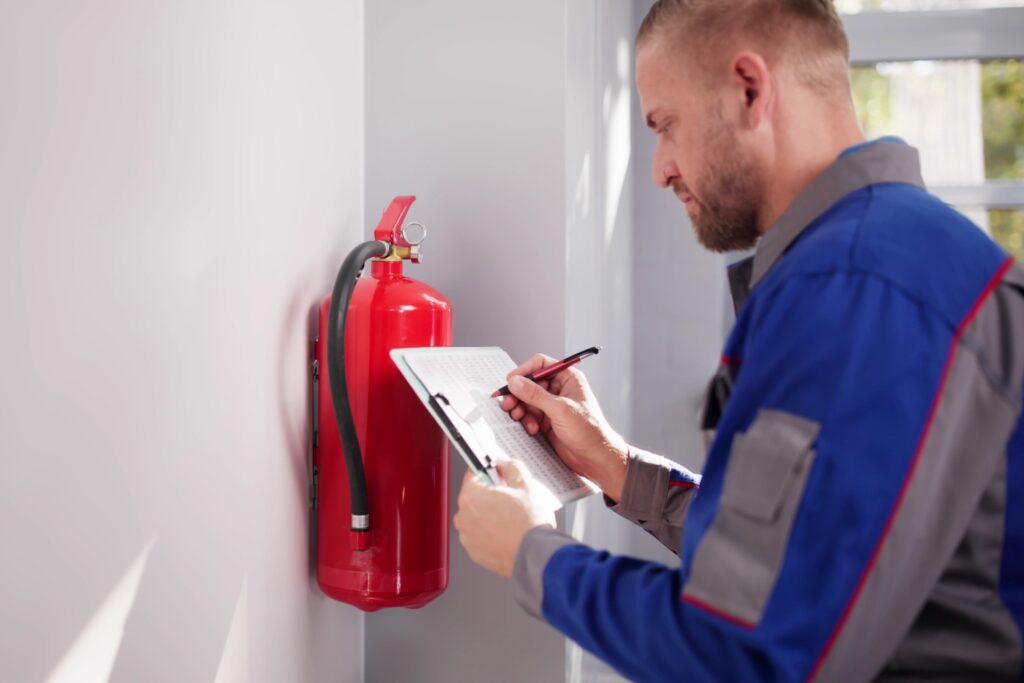
One of the most important and most frequently overlooked provisions of NFPA 80 is the requirement for annual fire door inspections. This is not a one-time obligation tied to building permit approval. It is an ongoing requirement for the life of the building.
All fire door assemblies must be inspected and tested at least once per year by a qualified person, who must confirm:
- The label is intact
- Clearance gaps are within tolerances
- The door closes and latches fully without manual assistance
- All hardware is operational
- No unauthorized modifications have been made.
Inspection results must be recorded and made available to the local fire marshal upon request. A building that cannot produce records is out of compliance regardless of the physical condition of its doors. Deficiencies must be corrected promptly, as NFPA 80 does not allow deferred repairs on fire door assemblies.
Industry-Specific Fire Door Considerations in Western Arkansas

While the code requirements are consistent, different industries tend to encounter fire door compliance challenges in predictable patterns.
- Retail and office: Mixed-use buildings require fire doors between tenant suites, at stairwells, and in exit corridors. High-traffic use accelerates hardware wear, making annual closer and latch inspections especially important.
- Healthcare and medical: Medical facilities must meet both the Arkansas Fire Prevention Code and federal Centers for Medicare and Medicaid Services (CMS) standards, making compliance more layered than in most other occupancy types.
- Hospitality and hotels: Hotels require fire doors at guest room entries along exit corridors, at stairwells, and in utility spaces. The high volume of doors in a typical hotel makes systematic inspection and record-keeping essential.
- Warehouse and distribution: Warehouse and distribution facilities are widespread throughout Western Arkansas, given the region’s logistics industry. These properties often require fire doors separating storage classifications and connecting warehouse and office spaces, with especially stringent requirements in high-piled storage facilities.
- Restaurants and food service: Restaurant kitchens often require fire-rated protection between the kitchen and other building areas. Hardware in these environments is exposed to grease, heat, and heavy daily use, requiring more frequent inspection than in standard commercial settings.
- Food processing and manufacturing: Industrial facilities in Fort Smith and the River Valley face fire door requirements at mechanical equipment areas and between manufacturing and office spaces, with the added complexity of heavy vehicle traffic near some openings.
Common Fire Door Violations
Some violations appear regularly in fire door inspections across commercial properties in Western Arkansas and throughout Arkansas more broadly. Here’s a list of common violations to be aware of:
- Propped-open fire doors: Any device holding a fire door open that is not tied to the building’s fire alarm system is a code violation.
- Missing or illegible labels: A label that has been painted over or removed renders the assembly non-compliant regardless of the door’s physical condition.
- Failed or improperly adjusted door closers: A closer that does not bring the door to a fully latched position must be repaired or replaced immediately.
- Clearance gaps exceeding NFPA 80 tolerances: Oversized gaps allow fire and smoke to bypass the assembly and typically result from settling, warping, or improper installation.
- Unauthorized hardware or modifications: Only hardware tested as part of the fire door assembly may be installed. Non-rated additions can void the door’s fire rating.
- No inspection records: Missing documentation is a violation of NFPA 80, regardless of the physical condition of the doors.
How to Stay Compliant With Western Arkansas Fire Door Regulations
Staying compliant requires a consistent, proactive approach rather than a reactive scramble before your next inspection.
- Schedule annual inspections with a qualified fire door professional. NFPA 80 places this responsibility on the building owner and requires that inspections be performed by someone with the knowledge to evaluate every component of the assembly. A visit from your local fire marshal is an enforcement inspection, not a substitute for the owner-required annual inspection.
- Address deficiencies immediately. Deferred repairs are not permitted under NFPA 80, and a documented non-compliant door creates significant liability exposure.
- Keep thorough records. Maintain inspection reports, repair invoices, and any documentation related to fire door installations or replacements.
- Engage your AHJ proactively. If you are planning a renovation or change of occupancy, contact your local fire marshal’s office before construction begins.
Get a Professional Fire Door Assessment in Western Arkansas
Commercial Door serves Western Arkansas businesses with professional fire door installation, inspection, repair, and maintenance. Whether you are managing a single location in Fort Smith or operating multiple facilities across the Northwest Arkansas corridor, our team understands the regulatory landscape and the practical demands of keeping fire door assemblies compliant year after year.
If you are unsure whether your building’s fire doors meet current requirements, or if you have an upcoming inspection and want to be prepared, contact Commercial Door today to schedule a fire door assessment for your property in Western Arkansas.


