
As technology advances, managing commercial building access has progressed past traditional locks and keys, with high-tech options like keyless entry becoming the preferred choice for commercial building owners. Keyless entry systems can come in various forms, from pin pads to key fobs or smart cards, providing building owners with enhanced security and more efficient user management.
If you’re looking to upgrade an existing property or are in the process of developing a new one, this guide covers everything you need to know about the various types of keyless entry systems available today.
What Is Keyless Entry?
You may have heard a lot about the latest security features for commercial buildings, but what is keyless entry, exactly? Keyless entry is more than just a replacement for a traditional lock and key system. It is a digitized access control system that allows you to provide or revoke building access to various users through options like mobile apps, key fobs, or even biometric scans.
As this feature continues to rise in popularity for commercial buildings, with the Smart Door Lock Market expected to hit 4.25 billion by 2033, a keyless entry system is more than just a convenient way to secure your property. It provides you with the ability to immediately update building access without the costly and time-consuming process of replacing a lock or key.
Keyless Entry Systems: Pros and Cons
There are several types of keyless entry systems that you can choose for your property, each with its own unique features. Keyless entry systems are not one size fits all, and each system has its own pros and cons. Ultimately, the right choice comes down to your specific business specifications, like building size, budget, and security requirements.
Proximity Cards and Key Fobs
Key fob and proximity card systems typically use RFID technology, which allows the user to tap to enter once the key fob or proximity card is in range of the proximity reader. This function makes key fobs and proximity cards a user-friendly choice for keyless entry, as the user simply needs to tap on the proximity reader for access. Credentials can also be deactivated instantly, if needed. However, key cards and fobs can often be misplaced, which may result in added costs to re-issue. Stolen key cards or fobs can lead to unauthorized access.
Mobile Access (App Credentials)
Mobile access systems offer touchless entry removing the physical credential requirement entirely. Users can issue or revoke access instantly, which means that lost or misplaced credentials are not an issue. However, this system relies on all users owning a smartphone, installing the app, and regularly updating it, and may require additional training to use.
PIN Pads
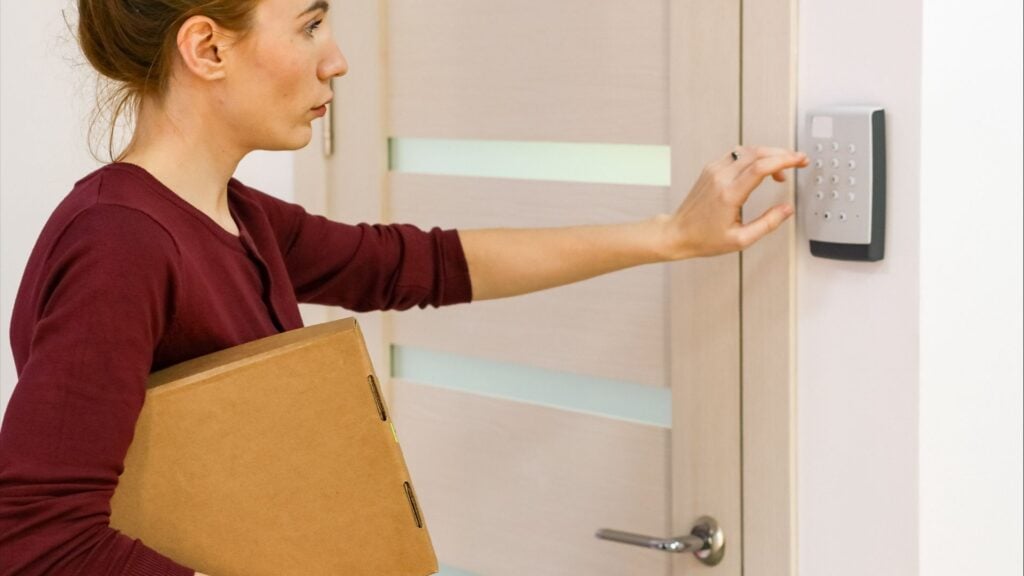
PIN pad systems require the user to input a pre-set numeric code, and access is granted if the correct code is entered. PIN pad systems do not require physical credentials and do not carry additional credential fees per user, making them the most cost-effective choice. Since the system operates on a single set code, there is also no way to track individual user entries. PIN codes can also be shared or easily observed by unauthorized users, posing a security risk.
Biometric Systems
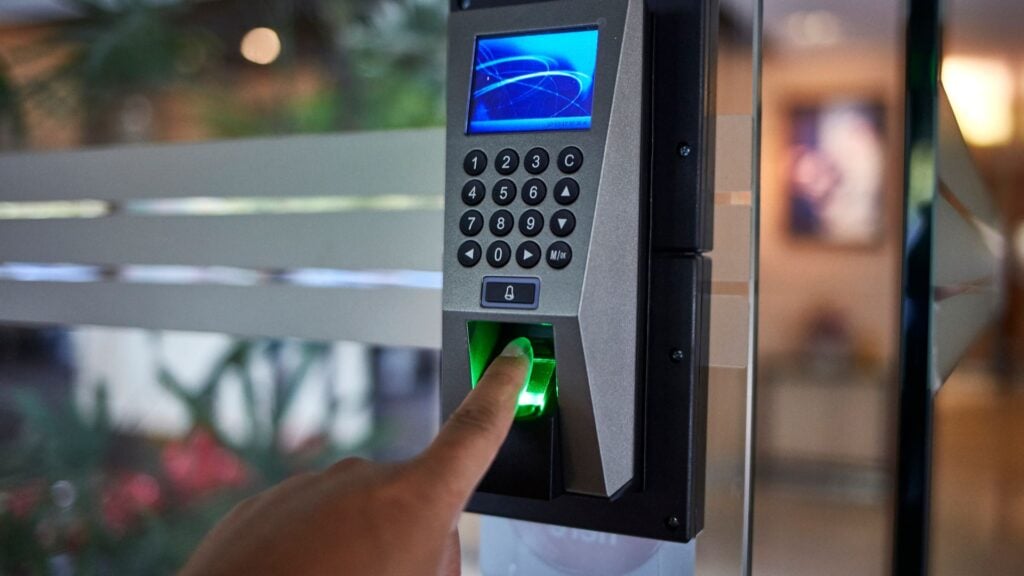
Biometric systems grant access based on physical attributes, such as facial features or fingerprints. The requirement of a physical attribute of the user to grant entry effectively eliminates the security risk of lost or stolen credentials, and can be instantly deactivated if needed. However, these systems have a much higher upfront installation cost, and must adhere to strict data collection and privacy laws depending on the state.
Benefits of Keyless Entry for Commercial Buildings
Regardless of which keyless entry system you choose, the advantages of upgrading your entry system go far beyond replacing a lock and key.
Granular Access Control and Audit Trail
Not only can you determine who has access to what doors, you can also decide what time they have entry to specific locations. Through these systems, you can also get a specific snapshot of who entered, the door they entered through, and when. This kind of unique customization and data reporting provides building owners with peace of mind that a traditional lock and key system cannot offer.
Instant Access Management
Some keyless entry systems allow users to add or revoke building access within seconds, helping companies manage access efficiently in high-employee turnover environments and
removing the need for building staff to pick up or drop off keys. Lost or stolen key fobs or cards can quickly be deactivated, eliminating potential security risks and preventing the need to replace locks.
Compatible With Existing Building Systems
Keyless entry systems, specifically mobile app keyless entry, can integrate with property and visitor management software, security cameras, and alarm systems. Integrating these control systems can cut down on operating costs and time.
Common Use Cases for Keyless Entry in Commercial Real Estate
Below are some examples of commercial property types that benefit from keyless entry systems.
Multi-tenant office buildings: Building owners can issue and manage credentials for several tenants without the hurdle of coordinating key pick up and drop off. Tenants can manage their own teams within their office space.
Healthcare facilities: Patient records, drug storage, and other restricted areas must meet strict compliance requirements, which make audit trails and specified access permissions from keyless entry systems essential.
Logistics facilities and warehouses: Modern access control systems can ensure that employees only have access to the property during their working hours. This is essential for businesses that operate around the clock, reducing the risk of unauthorized access and providing building managers control over who is on site at any given time.
What to Look for When Selecting a Keyless Entry System
While searching for the right keyless entry system for your commercial building, these are the factors to consider:
- Scalability: Can the system grow from one door to hundreds without hitting a user limit or requiring a platform change?
- Credential flexibility: Does the system support the specific credential types your building needs today, like limited access points for upper management, or those you may need as your company grows?
- Integration: Determine if the door control system connects with other building management software or security cameras.
- Compliance and data privacy: For companies considering implementing a biometric system, local data privacy and storage laws must be considered before installation, as biometric data collection laws vary by state. Failure to comply with state-specific regulations can expose businesses to legal and financial liability
- Cybersecurity: Electronic locks that operate on cloud platforms, like mobile credential apps or smart locks, expand your building’s risk for digital attacks. Before installation, ask the vendor what their encryption standards and history of data breaches are.
- Fail-safe behavior: Confirm how the keyless door will function in the event of a power or Wi-fi outage, including whether the door hardware has an emergency lock.
Is Keyless Entry Right for Your Building?
For the vast majority of commercial buildings, the answer is yes. For small business owners looking to reduce costs, a simple keypad system can provide the right amount of security. For larger building operators looking to update their security systems, options like proximity cards or biometric systems can provide a level of control, auditability, and scalability that a high-traffic environment requires.
Whether you’re developing a new commercial property or upgrading an existing one, keyless entry is widely considered to be the standard for modern access control needs. If you’re looking for commercial door keyless entry installation services in Tulsa or Oklahoma City, the Commercial Door team is here to help. We offer full-scale commercial door services, including free quotes, installation, repairs, and maintenance. Contact us today to get started.


