
Commercial garage doors are built to handle the demands of busy commercial and industrial environments. Unlike residential doors, they are designed for larger openings, heavier use, and specialized operational needs. Businesses rely on these doors for security, efficient movement of people and equipment, environmental control, and reliable day-to-day operations. Because different building types place very different demands on door systems, there are many types of commercial garage doors designed for specific functions, industries, and structural requirements.
This guide explains the main types of commercial garage doors used in modern buildings and how they differ from one another. It also covers the materials used to construct commercial doors, the factors businesses should consider when choosing one, typical door opening size and clearance requirements, and which door types are commonly used across different industries. Together, these sections provide a clear overview of the options available so business owners and facility managers can better understand which door systems may be best suited for their building.
What Are Commercial Garage Doors?
Commercial garage doors are large, heavy-duty door systems designed for commercial, industrial, and institutional buildings. They are typically installed in openings that allow vehicles, equipment, shipments, or large groups of people to move in and out of a facility. These doors are built to withstand frequent operation, larger structural loads, and harsher environments than residential garage doors.
One of the main differences between commercial and residential garage doors is scale and durability. Commercial doors are often wider and taller to accommodate trucks, forklifts, service vehicles, or large equipment. They are also built with stronger materials, reinforced hardware, and higher cycle ratings so they can open and close many times per day without premature wear.
Commercial garage doors are commonly found in a variety of commercial buildings, including:
- Warehouses
- Manufacturing facilities
- Distribution centers
- Auto service bays
- Fire stations
- Loading docks
- Parking structures
- Retail spaces
Because these doors often play a critical role in operations, security, and building performance, choosing the right type of door for the environment is an important decision for property owners and facility managers.
Key Factors When Choosing a Commercial Garage Door
Choosing between different types of commercial garage doors involves more than selecting a door that fits the opening. The right door depends on how the building operates, how frequently the door is used, and what performance requirements the space demands. Considering these factors early can help ensure the door supports daily operations, safety, and long-term durability.
- Building use and traffic flow: The way a facility operates often determines the most appropriate door type. Warehouses, service bays, manufacturing facilities, and retail environments all have different traffic patterns that influence door durability, speed, and size requirements.
- Insulation and thermal performance: Buildings that are heated, cooled, or temperature-controlled often benefit from insulated commercial garage doors that help reduce energy loss and maintain more stable indoor conditions. Insulated doors can also provide low sound transmission between spaces, which can help reduce noise from equipment, traffic, or production areas.
- Cycle ratings and door durability: Commercial doors are rated by how many times they can open and close before major components wear out. Facilities with frequent traffic may require high-cycle doors designed for constant operation.
- Security considerations: Some environments require stronger door construction, reinforced locking systems, or steel components to help prevent unauthorized entry and protect equipment, vehicles, or inventory.
- Speed of operation: In high-traffic areas, door speed can significantly affect workflow efficiency. Faster doors can help maintain productivity, reduce waiting time for vehicles and equipment, and minimize air exchange between indoor and outdoor environments.
- Visibility and natural light: Certain door types, such as aluminum full-view doors, allow natural light into a building and provide exterior visibility. This can be beneficial in retail spaces, automotive facilities, and showrooms where visibility and appearance are important.
- Environmental and weather conditions: Outdoor exposure, wind loads, moisture, dust, and temperature fluctuations can influence which commercial garage doors perform best in a given environment.
- Space requirements and door operation: The amount of headroom, side room, and ceiling space available can affect which types of commercial garage doors can be installed, since different systems require different track styles or overhead clearances.
Types of Commercial Garage Doors
Commercial garage doors come in several designs, each built to serve different operational needs. Some doors prioritize durability and security, while others focus on speed, visibility, or space efficiency. The comparison table below highlights how the most common types of commercial garage doors perform across key decision factors.
| Door Type | Common Applications | Security | Durability | Speed | Energy Efficiency | Typical Opening Dimensions | Cost | Maintenance |
|---|---|---|---|---|---|---|---|---|
| Sectional overhead doors | Warehouses, service bays, loading docks | Moderate | High | Moderate | High | 12-32 ft W × 12-24 ft H | Moderate | Moderate |
| Rolling steel doors | Industrial buildings, storage facilities | High | Very high | Moderate | Low | 12-30 ft W × 12-20 ft H | High | Low |
| Sheet doors | Self-storage units, light commercial buildings | Moderate | Moderate | Moderate | Low | 8-12 ft W × 7-10 ft H | Low | Low |
| High-speed doors | Manufacturing, logistics, high-traffic openings | Low to moderate | High | Very fast | Moderate | 8-20 ft W × 8-16 ft H | High | Moderate |
| Fire-rated doors | Fire separation openings, safety zones | High | High | Slow | Low | 8-24 ft W × 8-20 ft H | High | Moderate |
| Aluminum full-view doors | Showrooms, dealerships, restaurants | Low to moderate | Moderate | Moderate | Low | 8-20 ft W × 8-16 ft H | High | Moderate |
| Security grilles | Retail storefronts, food courts, parking areas | Moderate to high | High | Moderate | None | 8-20 ft W × 8-12 ft H | Moderate | Low |
| Specialty commercial doors | Cold storage, clean rooms, food processing plants | High | Very high | Varies | High | Varies by application | High | Moderate |
Sectional Overhead Doors
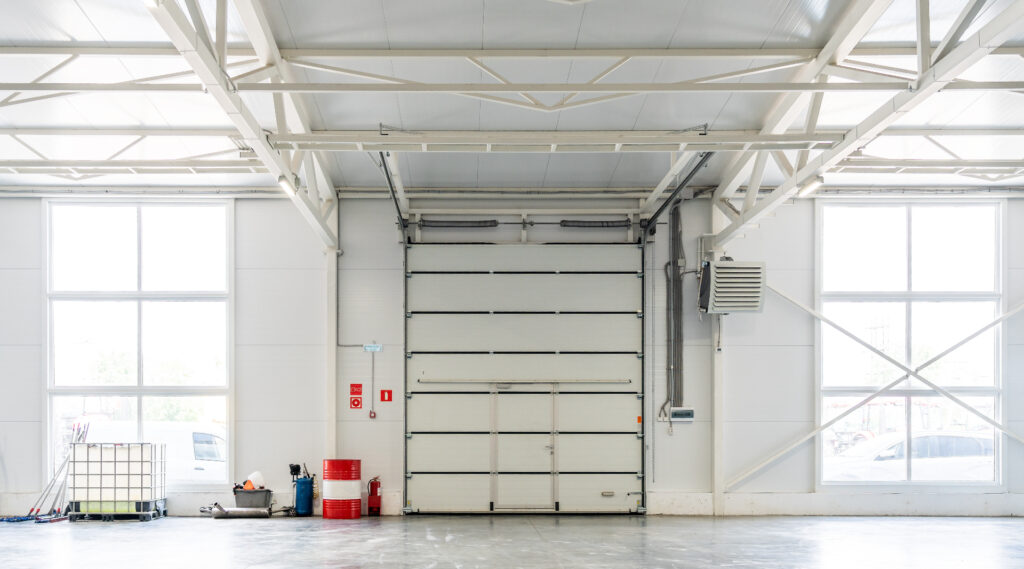
Sectional overhead doors are one of the most common commercial garage door options because they offer a strong balance of durability, insulation, and versatility. These doors are built from horizontal panels connected by hinges that travel along overhead tracks and rest parallel to the ceiling when open. Many businesses choose sectional doors for large exterior openings where vehicles, equipment, or shipments regularly move in and out of a building. Because the panels seal tightly against the frame and can be insulated, they work especially well in loading bays, service entrances, and other openings where weather protection and energy efficiency matter.
Rolling Steel Doors
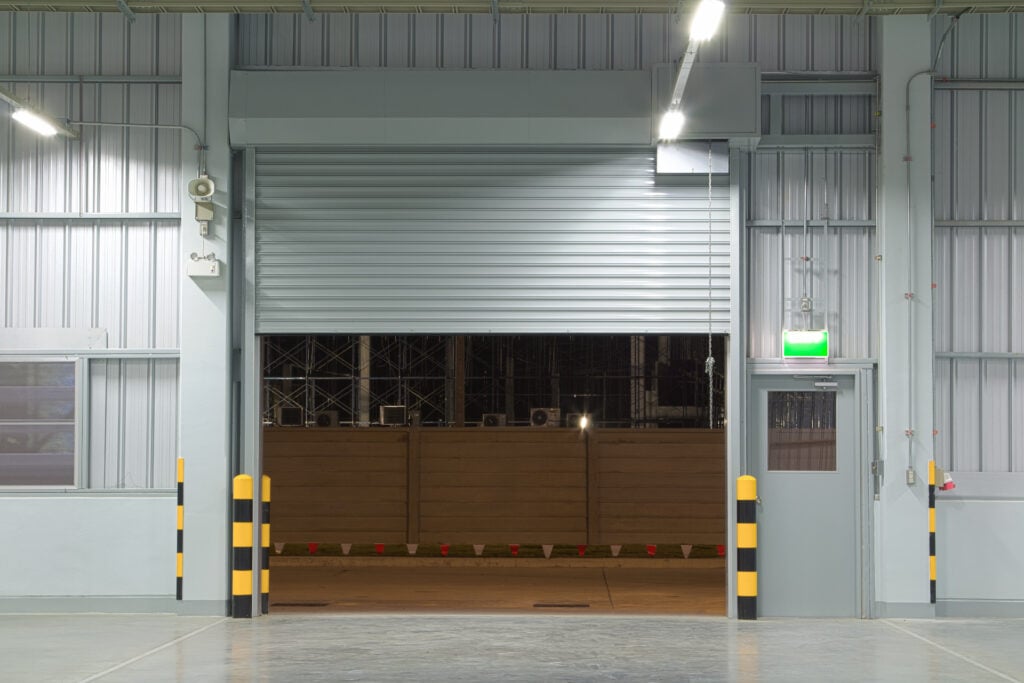
Rolling steel doors are designed for strength and space efficiency, making them a common choice where security and durability are priorities. Instead of using panels that travel along ceiling tracks, these doors are made of interlocking steel slats that roll into a compact coil above the opening when raised. These systems are often referred to as rolling service doors when they are installed in commercial service entrances, loading areas, or maintenance access points. Businesses often choose these doors for exterior openings that need strong protection against forced entry, impact, or harsh weather.
Sheet Doors
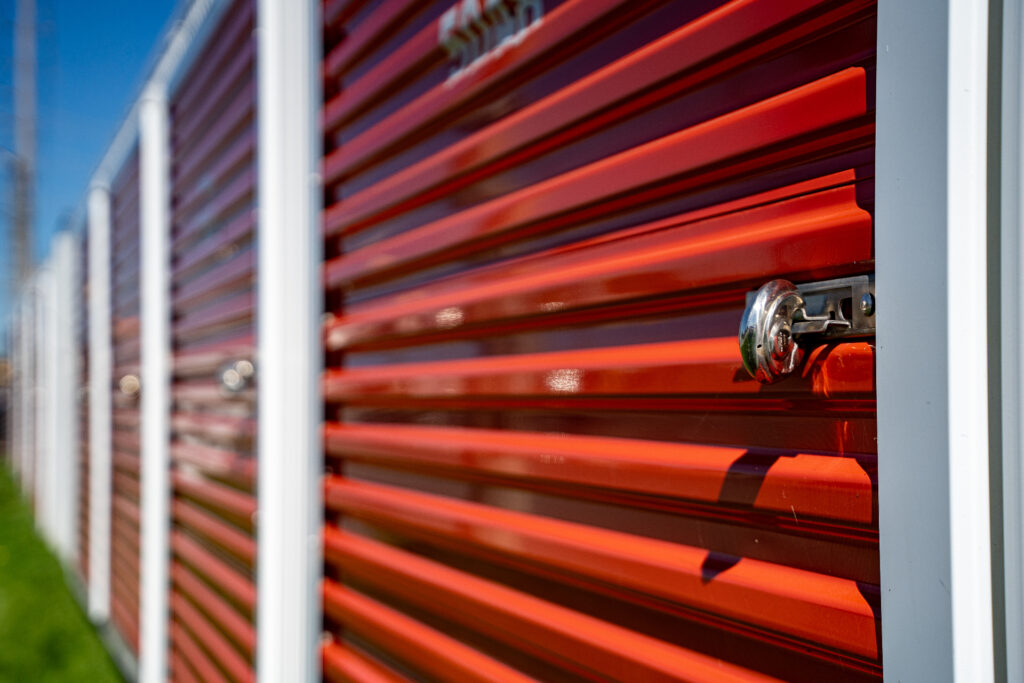
Sheet doors are a lightweight type of rolling door commonly used for basic security and access control in smaller commercial openings. Instead of interlocking slats, these doors are typically made from a single corrugated sheet of steel that rolls into a coil above the doorway. Businesses often choose sheet doors for areas where a simple, cost-effective barrier is needed rather than heavy-duty security or insulation. They work well for storage unit entrances, utility spaces, maintenance areas, and other secondary openings where durability and straightforward operation are more important than speed or energy efficiency.
High-Speed Doors
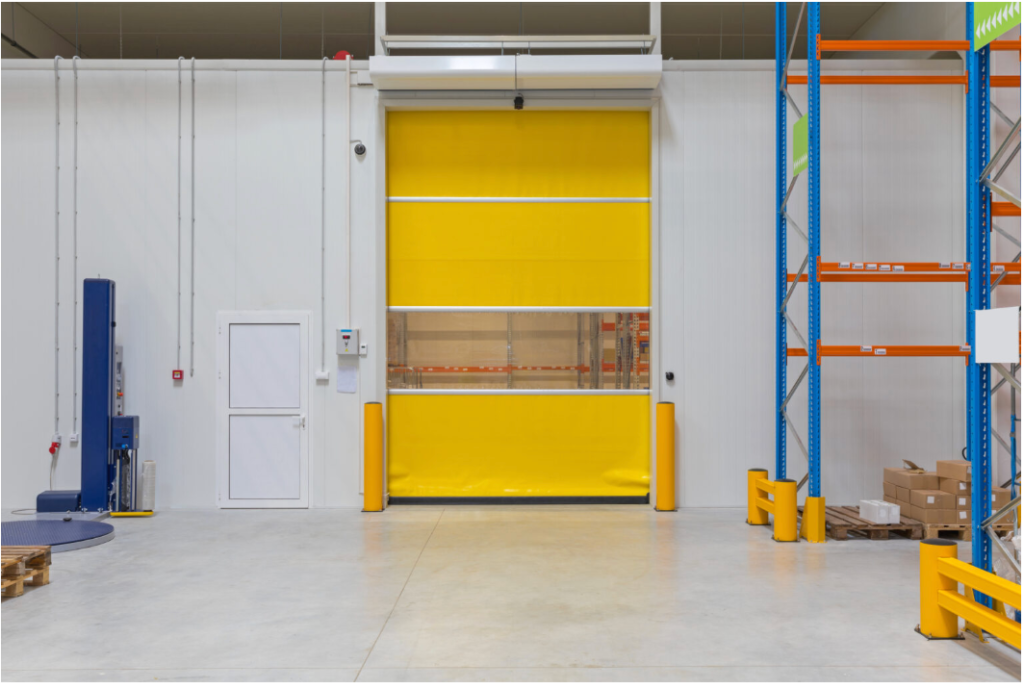
High-speed doors are designed for environments where openings are used frequently and operational efficiency matters. They use specialized motors and lightweight panels or curtains, such as rubber roll-up doors, that allow them to open and close much faster than traditional commercial doors. Businesses often install high-speed doors in areas where traffic moves constantly between spaces and delays can disrupt workflow. They work well in interior openings that separate production areas, climate-controlled zones, or logistics pathways where minimizing air exchange, maintaining temperature, or keeping dust and contaminants contained is important.
Fire-Rated Rolling Doors
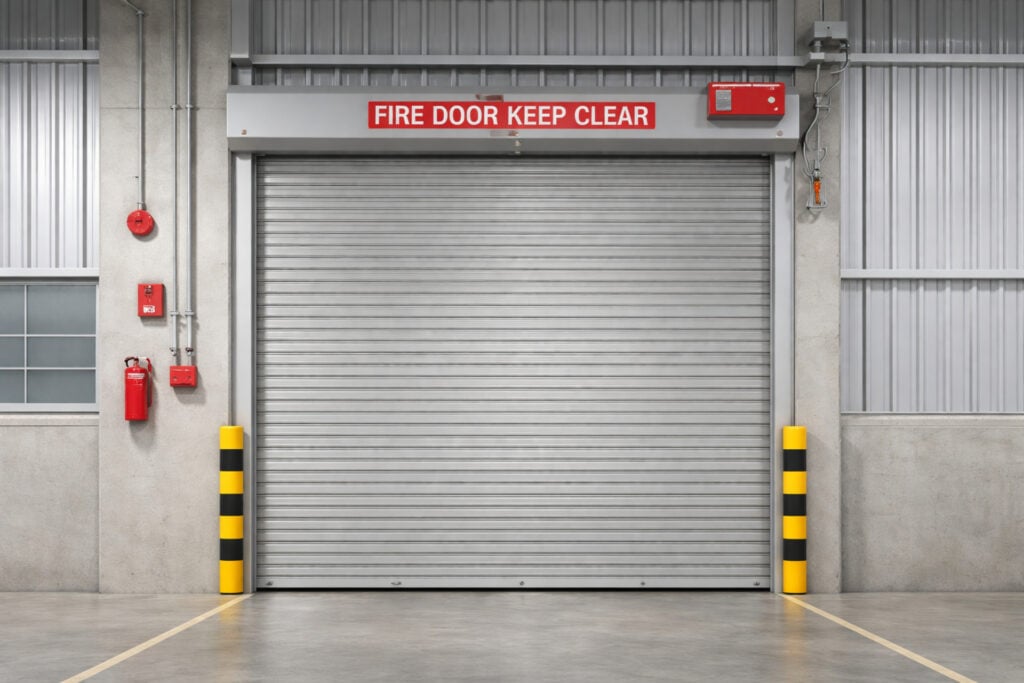
Fire-rated rolling doors are a specialized type of fire door designed to help contain fire and smoke during an emergency. Like other rolling steel doors, they use interlocking steel slats that coil above the opening, but they are built and tested to meet specific fire-resistance ratings. These doors are typically connected to a building’s fire alarm or detection system, so they automatically close when a fire is detected. Businesses install fire-rated rolling doors in openings where building codes require fire separation, such as between storage areas, corridors, mechanical rooms, or different sections of a facility. When activated, the door helps slow the spread of flames and heat, giving occupants more time to evacuate and helping limit damage to other parts of the building.
Full-View Aluminum Doors
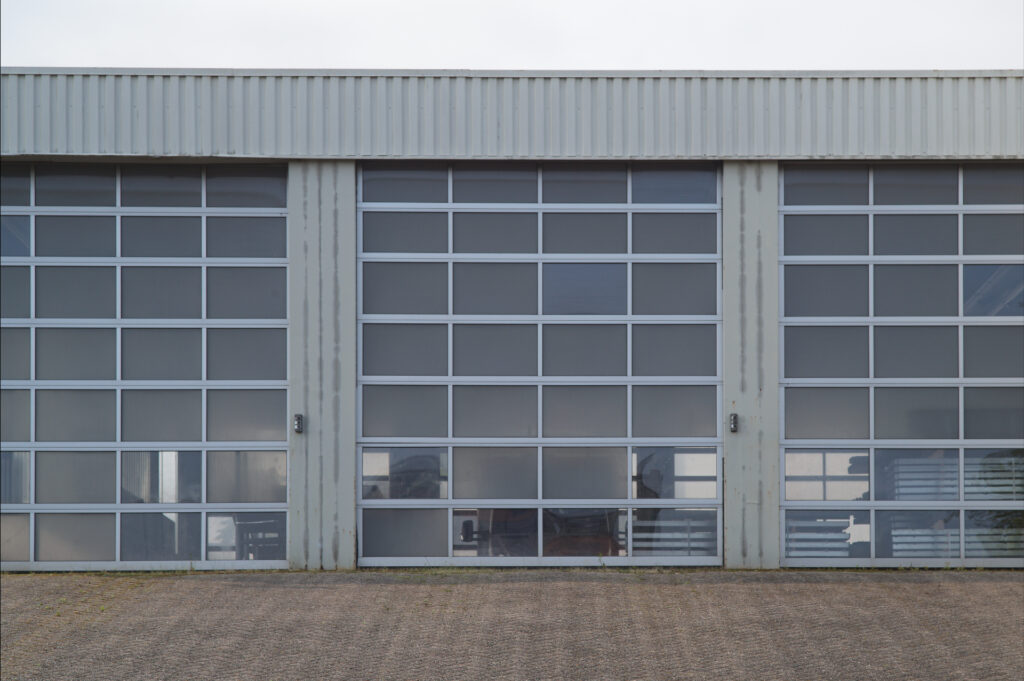
Full-view aluminum doors, or aluminum glass overhead doors, are designed to provide visibility and natural light while still functioning as a durable commercial overhead door. These doors use aluminum frames with large glass panels, creating a modern appearance that allows people to see through the door when it is closed. Businesses often choose aluminum full-view doors for exterior openings where aesthetic appeal and visual access are as important as functionality, such as entrances that face customers or public spaces. They work well in areas where bringing daylight into a building improves visibility or aesthetics while still allowing the opening to function like a traditional overhead door when vehicles or equipment need to pass through.
Security Grilles
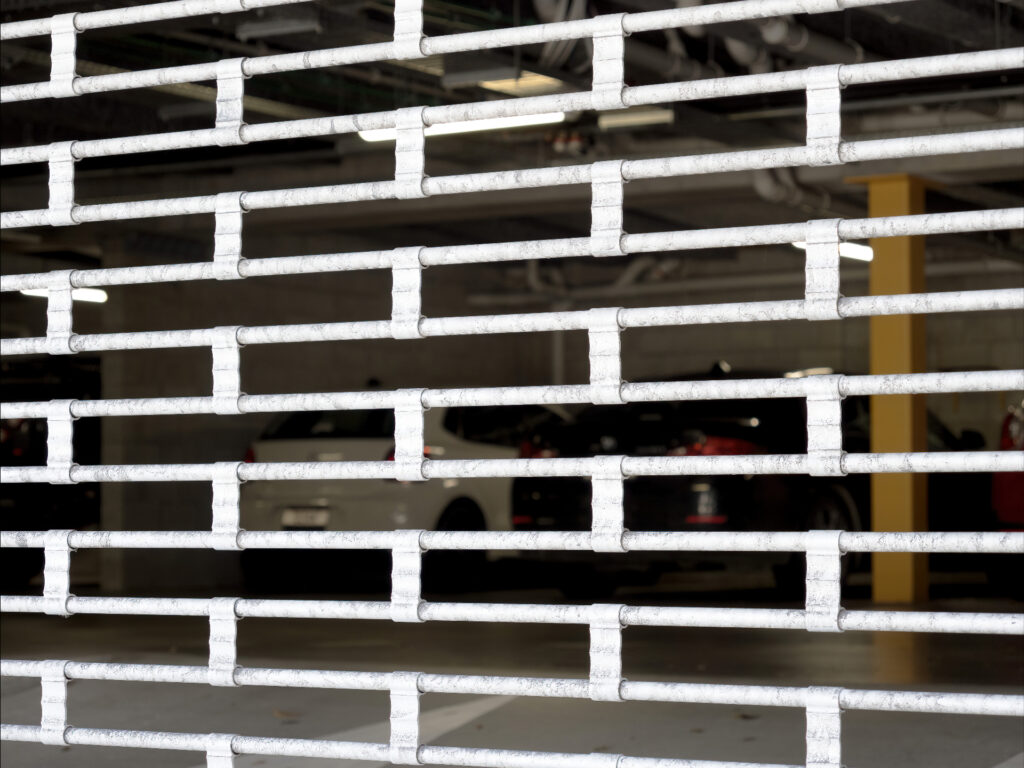
Security grilles are rolling doors made from open metal bars rather than solid panels, allowing visibility and airflow even when the opening is secured. Like other rolling systems, the grille retracts into a coil above the opening when raised, which keeps the overhead area clear. Businesses often install security grilles to protect an entrance or storefront after hours. They work well in openings that face public areas, hallways, or shared commercial spaces where maintaining visibility and ventilation is useful while still providing a physical barrier when the space is closed.
Specialty Commercial Doors

Specialty commercial doors are designed for environments that have specific operational or environmental requirements that standard overhead or rolling doors cannot meet. These doors may be engineered for temperature-controlled areas, sanitation-sensitive spaces, corrosion resistance, or unusually large openings, such as airplane hangars. Businesses install specialty high-performance doors in parts of a facility where controlling airflow, maintaining strict cleanliness, protecting equipment, or accommodating oversized vehicles and machinery is essential. Because these doors are built for specialized conditions, their materials, sealing systems, and operating mechanisms are often tailored to the demands of the space they serve.
What Are the Different Types of Commercial Garage Door Materials?
The materials used to construct a commercial garage door play a major role in its durability, appearance, energy efficiency, and long-term performance. Different materials are suited for different environments depending on factors such as exposure to weather, operational demands, and maintenance expectations. Understanding how common commercial door materials compare can help businesses choose a door that performs reliably in the conditions their facility faces.
- Steel: Steel is the most common material used in commercial garage doors because it offers strong durability and security at a reasonable cost. Most steel doors are constructed from galvanized steel panels or slats, which help resist corrosion, impact, and long-term wear. Many steel commercial garage doors can also be insulated, which improves efficiency, reduces energy costs, and maintains more stable interior temperatures.
- Aluminum: Aluminum doors are lighter than steel and naturally resistant to corrosion, which makes them useful in environments where moisture or chemicals may be present. They are often used for doors that incorporate glass panels or where a modern architectural appearance is desired.
- Glass and glazing systems: Glass panels are commonly integrated into commercial garage doors to allow natural light and visibility while the door is closed. These panels are usually mounted within aluminum frames and can be clear, tinted, or insulated depending on the needs of the building.
- Fiberglass and composite panels: Fiberglass and composite materials are sometimes used in commercial doors where corrosion resistance and reduced weight are priorities. These materials can also allow light to pass through while resisting dents and rust in environments that would otherwise damage traditional steel panels.
- Specialty materials: Some commercial doors use specialized materials such as stainless steel or high-performance composites when sanitation, corrosion resistance, or extreme durability is required. These materials are typically chosen for environments with strict cleanliness standards or harsh operating conditions.
The Best Types of Commercial Garage Doors by Industry
Different industries place different demands on commercial garage doors depending on how a facility operates. Traffic levels, security needs, environmental control, and the types of vehicles or equipment moving through the opening can all influence which door systems work best. The table below highlights common commercial door types used across a range of industries.
| Industry | Common Commercial Garage Door Types |
|---|---|
| Airport and freight companies | Airport and freight facilities often use high-speed doors to support constant cargo movement and reduce delays. Heavy-duty sectional overhead doors and rolling steel doors are also commonly installed at large exterior openings where durability and security are important. |
| Automotive service, repair, and dealerships | Automotive facilities often rely on sectional overhead doors or aluminum full-view doors in service bays where vehicles move in and out throughout the day. Aluminum full-view doors are also commonly installed in showrooms and customer-facing service areas because they allow natural light and clear visibility while still functioning as commercial overhead doors. |
| Healthcare facilities | Healthcare facilities may use high-speed doors in areas where maintaining controlled environments and efficient movement between spaces is important. Insulated sectional doors are also common at service entrances or loading areas that require temperature stability. |
| Hotels and hospitality | Hotels and hospitality properties often use sectional or aluminum full-view doors in maintenance areas, service entrances, or parking structures. These doors help manage vehicle access while maintaining a clean and professional appearance in visible areas of the property. |
| Manufacturing | Manufacturing facilities frequently install high-speed doors between production areas to maintain workflow and reduce the movement of dust or contaminants. Rolling steel or sectional overhead doors are commonly used at exterior openings where equipment and materials enter or leave the building. |
| Office buildings | Office buildings often use aluminum full-view doors in parking areas or service entrances where visibility and aesthetics are important. Security grilles may also be installed in interior spaces where entrances or storefront-style openings need to be secured after business hours. |
| Parking garages and parking structures | Parking structures often use security grilles or rolling steel doors to control vehicle access and protect entry points when the facility is closed. These open-air designs allow circulation while still providing security when needed. |
| Restaurants | Restaurants sometimes install aluminum full-view doors in areas that open to patios or outdoor seating spaces to create flexible indoor-outdoor environments. Counter doors are also common at service and drive-thru windows or food pickup counters, where the opening must be secured after operating hours. |
| Retail stores | Retail stores frequently use security grilles to protect storefront openings while still allowing visibility into the store after closing. Counter shutters may also be installed at service counters or kiosks where staff interact with customers through smaller openings. |
| Schools | Schools commonly install sectional overhead doors in maintenance areas, storage spaces, or facilities where equipment needs to be moved in and out of the building. Rolling steel doors may also be used in areas that require additional durability and security. |
| Warehouses | Warehouses often use sectional overhead doors or rolling steel doors at loading docks where trucks and shipments move in and out regularly. High-speed doors are also commonly installed inside warehouses where forklifts and workers move frequently between operational zones. |
| Distribution and logistics centers | Distribution and logistics centers typically rely on high-speed metal doors to support continuous traffic and maintain efficient workflow between staging, sorting, and shipping areas. Sectional dock doors and rolling steel doors are also used at exterior loading areas that require security and durability. |
Get Expert Help Choosing the Right Commercial Garage Door
Choosing the right commercial garage door involves more than selecting a door that fits the opening. Businesses need to consider how the space is used, how frequently the door will operate, the level of security required, and the environmental conditions the door must handle. By understanding the different types of commercial garage doors, the materials used to construct them, and the factors that affect performance, business owners can make more informed decisions that support reliable operations and long-term durability.
If your business is located in our service area and you need help selecting, installing, repairing, or maintaining commercial garage doors, the team at Commercial Door can help. Our technicians work with a wide range of commercial door systems and can help you identify the best option for your facility. Contact us today to discuss your building’s needs and schedule service for your commercial garage doors.


