
Fire doors are more than building features. They are required safety systems that protect lives and property in an emergency. In Dallas-Fort Worth, these doors must meet both national fire safety standards and local fire code requirements enforced by city fire marshals.
Building owners are responsible for making sure fire doors are properly installed, maintained, and inspected on schedule. This article gives you a clear overview of the regulations that apply in the DFW area, the most common compliance issues, and how professional services help keep your property safe and up to code.
What Are The Current Fire Door Regulations in Dallas-Fort Worth?
In Dallas-Fort Worth, commercial fire doors are regulated under the 2021 International Fire Code, which both cities have adopted with their own amendments. These codes incorporate standards from the National Fire Protection Association (NFPA) Chapter 80, the national guideline for fire doors and other systems that protect openings. Together, they outline how fire doors must be constructed, labeled, installed, and maintained to provide effective protection during fire conditions.
Local enforcement is handled by the Dallas Fire-Rescue Department and the Fort Worth Fire Department’s Bureau of Fire Prevention/Fire Marshal’s Office. Inspectors in both cities look for compliance with fire ratings, labeling, approved hardware, and egress clearance. They also conduct inspections to confirm that fire doors are reviewed annually, as required by NFPA 80. Businesses that fail to meet these expectations can face violations, fines, and even delayed occupancy approvals. General fire door requirements in Dallas-Fort Worth include:
- Fire rating and labeling: Every fire door must carry a visible, approved label showing its fire-resistance rating.
- Proper installation: Frames, hinges, and other parts must be installed according to code and manufacturer specifications.
- Automatic closing and latching: Doors must close on their own and latch securely with listed hardware.
- Unobstructed access: Doors must remain free of obstructions and cannot be blocked, chained, or propped open.
- Compatible hardware: Panic bars, locks, or other hardware must be fire-rated and approved for use with the door.
- Annual inspection: Fire doors must be inspected at least once per year, and written records of those regular inspections must be available.
What Kind of Hardware Is Required for a Fire Door Assembly in Dallas-Fort Worth?
A fire door is only as effective as the hardware attached to it. In Dallas-Fort Worth, inspectors closely examine every component of a fire-rated door assembly to confirm that each part is also fire-rated and approved. If even one piece of hardware is non-compliant, the entire assembly can fail inspection. This is especially important for existing doors, since replacements or upgrades must match the same standards. Key types of fire safety hardware include:
- Hinges and pivots: Hinges and pivots must be fire-rated and properly sized to support the door’s weight and rating.
- Locks and latches: Locks and latches may only be listed as fire-rated mortise locks, cylindrical locks, or latch sets.
- Door closers: Door closers are required on most fire-rated doors to ensure the door closes and latches automatically.
- Panic and exit hardware: Panic and exit hardware, such as push bars or devices, must be fire-rated in occupancies where they are required based on load and use.
- Coordinators (for pairs of doors): Coordinators are devices used on double fire doors to make sure one leaf closes before the other, so the doors latch properly.
- Flush bolts and astragals: These are parts used on double doors. Flush bolts secure one leaf of the door in place, while astragals cover the gap between the doors. Both must be fire-rated and installed correctly to maintain compliance.
- Glazing and vision panels: These are the glass inserts often found in fire doors. The glass, frames, and beads must all be listed for fire-rated use to ensure the opening still meets code.
- Electrified hardware: Electrified hardware, such as strikes, card readers, or magnetic locks, must be fire-rated and cannot interfere with the door’s ability to open or close.
- Seals and gaskets: Seals, intumescent strips, and gaskets must remain intact to block smoke and flames effectively.
- Kick plates and protective plates: Kick plates and protective plates are only permitted if they fall within the size limits set by NFPA 80.
What Are Some Common Fire Door Compliance Issues in Dallas-Fort Worth Businesses?
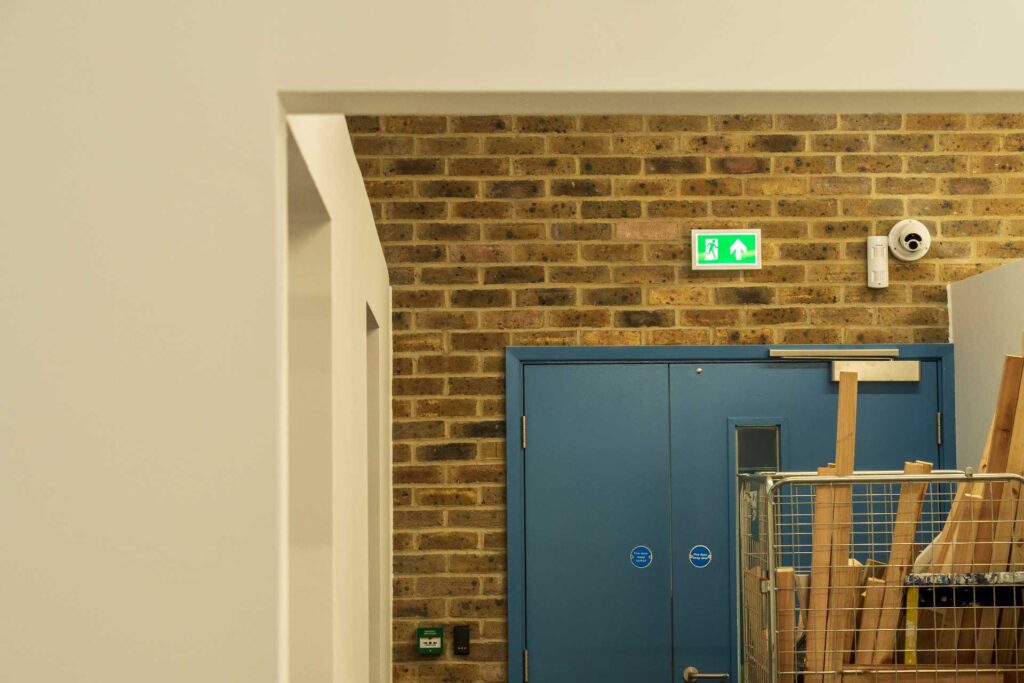
Even when fire doors are installed correctly, ongoing use and poor maintenance can create problems. Your fire doors may not be able to slow the spread of flames and smoke as they should, and it could mean you don’t pass the annual inspection. Common problems include:
- Propped-open doors: Using wedges, cords, or equipment to hold a door open prevents it from closing during a fire.
- Blocked egress routes: Storing furniture, boxes, or trash in front of a fire door or exit blocks required clearance.
- Missing or damaged labels: Fire doors without a clear, legible rating label cannot be verified as compliant.
- Non-compliant hardware: Replacing door closers, locks, or panic bars with non-rated parts fails code requirements.
- Disabled self-closing devices: Removing or disconnecting closers to keep doors open is a common violation.
- Damaged frames or hinges: Warped, cracked, or loose parts prevent the door from closing and latching properly.
- Worn or missing seals and gaskets: These gaps allow smoke or flames to pass through, reducing the door’s protection.
- Improper field modifications: Drilling holes, cutting vision panels, or altering the door in ways not approved by the manufacturer.
- Painted-over labels or hardware: Covering labels or rated components with paint makes them unreadable and non-compliant.
- Improper storage of combustible materials nearby: Placing flammable items against or near a fire-rated door can draw citations.
- Failure to maintain records: Businesses must keep written proof of annual periodic inspections for review by local fire marshals.
What Fire Door Inspection and Maintenance Responsibilities Do Property Owners Have in Dallas-Fort Worth?
In the DFW area, building owners and property managers must ensure that fire doors are kept in safe working order. NFPA 80 requires that every fire door assembly be inspected at least once per year by a qualified person, meaning someone with the training, knowledge, and experience to evaluate the condition and operation of fire door assemblies.
While NFPA 80 does not mandate a specific certification, many businesses in Dallas-Fort Worth choose inspectors who have completed industry-recognized programs, such as Intertek’s IQP certification or the Door and Hardware Institute’s FDAI training, to avoid questions during a fire marshal review. Local fire marshals may request proof of these annual inspections during compliance checks. These professional inspections cover the entire fire door assembly, including the door, frame, hardware, seals, and labeling.
In addition to the required annual inspection, businesses are encouraged to perform their own routine checks throughout the year. These self-checks involve making sure the doors close and latch without obstruction, that the escape path remains clear, and that no one has modified the hardware or frame. While not a substitute for the annual inspection, this ongoing attention helps identify problems early and ensures doors remain functional between official reviews.
Accurate records of both professional and in-house inspections should be kept, since Dallas Fire-Rescue and the Fort Worth Fire Department have the authority to request documentation during compliance checks.
How Professional Technicians Help Keep Fire Doors Compliant
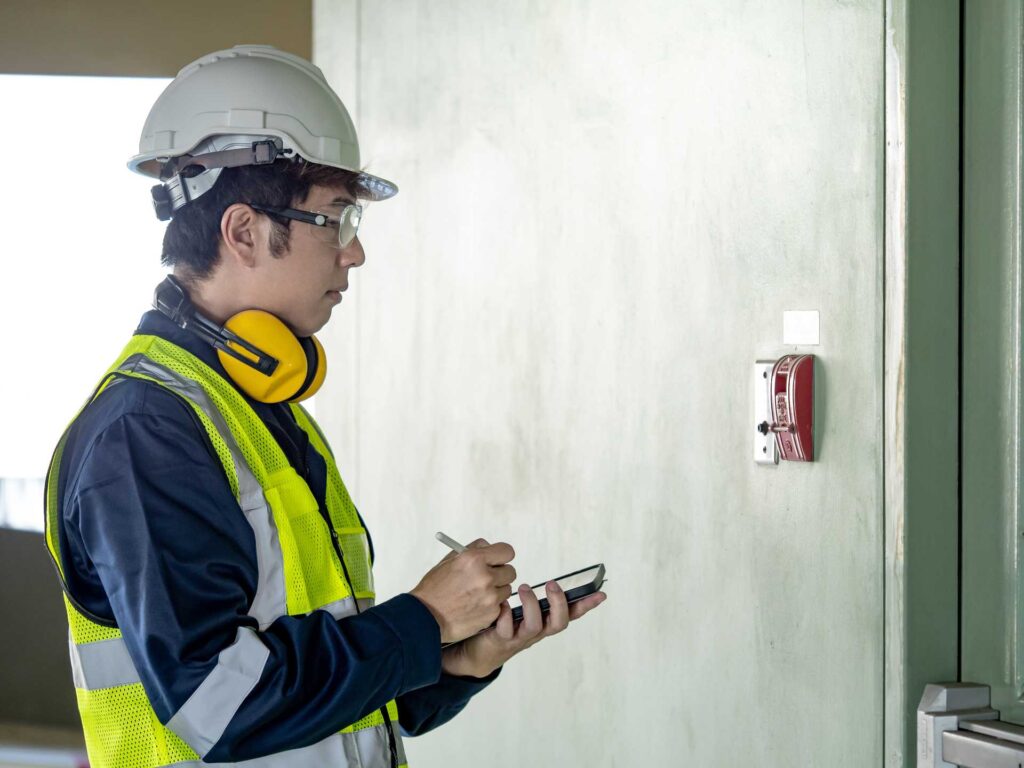
Meeting fire door regulations in Dallas-Fort Worth requires more than simply installing a rated door. Every part of the system must be handled correctly, from installation and inspection to ongoing maintenance and repair, to ensure compliance with local fire codes. For example, fire doors must work together with systems like sprinklers and fire dampers to slow the spread of fire throughout a facility. They also need to be clearly marked with visible signs and installed in the proper location to guide occupants toward safe exits.
Trained technicians understand how to service various types of fire door assemblies found throughout a facility. They install frames, hardware, and doors to the proper standards and confirm that each fire door performs as required under NFPA 80. They also perform annual inspections, checking hinges, closers, labels, seals, and other components that must function correctly for the door to pass review.
When issues are identified, professionals repair or replace damaged parts using fire-rated components. This may include items like fusible links, which are heat-sensitive metal devices that melt at a set temperature to automatically release and close a fire door, or self-closing hardware that ensures the door shuts properly in an emergency.
Regular service helps identify small problems early, reducing the risk of violations and safety hazards. For DFW business owners, relying on skilled fire door specialists is a critical step in keeping buildings safe and code-compliant year after year.
Protecting Your Business Through Fire Door Compliance
Fire door regulations in Dallas-Fort Worth exist to protect lives and property, and compliance depends on details like fire ratings, approved hardware, annual inspections, and accurate records. Even minor oversights-such as a missing label, non-rated hardware, or a propped-open door-can weaken protection on one side of a barrier and allow flames to move through walls faster than intended.
The best way to stay compliant is to partner with specialists who have a strong understanding of NFPA 80 and the fire codes enforced by Dallas Fire-Rescue and the Fort Worth Fire Department. These professionals make sure doors are properly installed, inspected, and equipped to perform under emergency conditions.
That’s where Commercial Door comes in. Our team provides professional fire door installation, inspection, repair, and maintenance throughout the Dallas-Fort Worth metroplex. We handle every step of the process, from making sure hardware is compliant to keeping documentation ready for local fire marshal reviews. If your fire doors are due for inspection or repair, schedule a free estimate with Commercial Door today. We’ll help you keep your building safe, compliant, and prepared for inspection.


